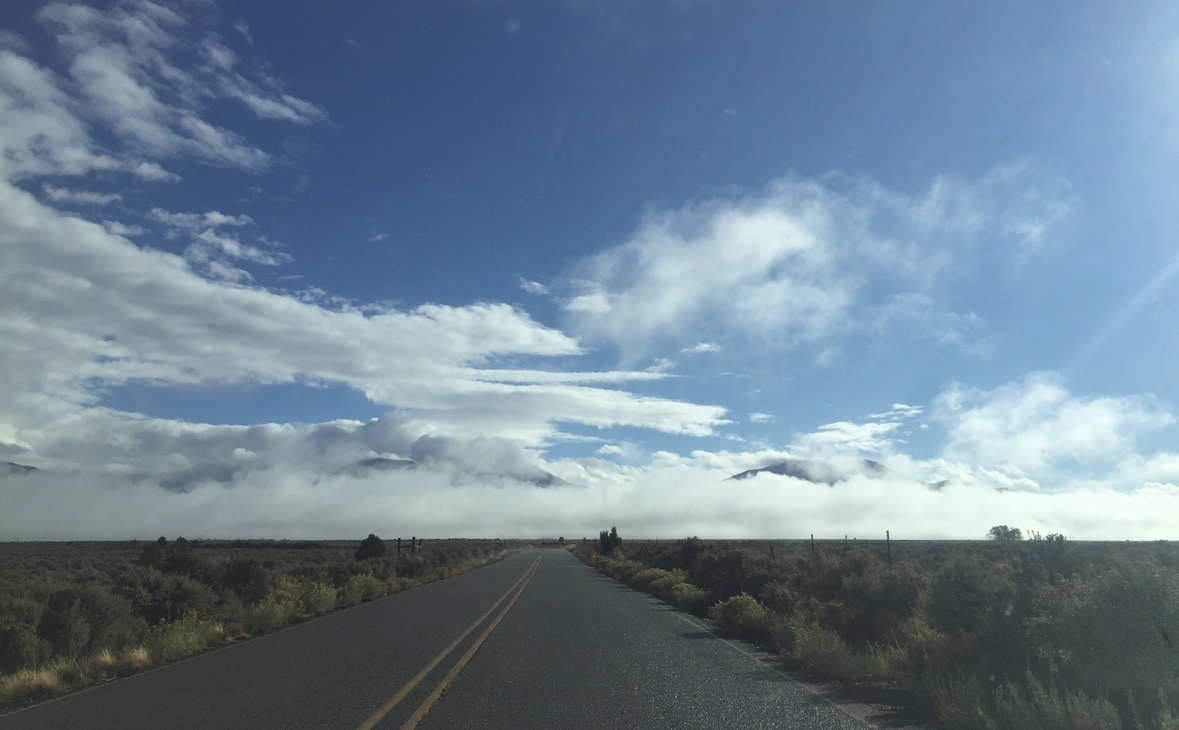
New Mexico · National Historic Landmark · Living community
Taos
Pueblo
Two days shaped by welcome, play, water, and gathering.
Beyond the park system
The land was not a museum. It was home.
Taos Pueblo is not a unit of the National Park Service. It is a sovereign, living Native community, a National Historic Landmark, and a UNESCO World Heritage Site. Its multistory adobe buildings stand on both sides of the river beneath the Sangre de Cristo Mountains, within a homeland continuously inhabited for many centuries.
Rita and Robbie spent two days there as guests. They had been invited to a gathering that brought Taos and visiting Lakota people together to share food, dance, conversation, and support.
Taos Pueblo official site ↗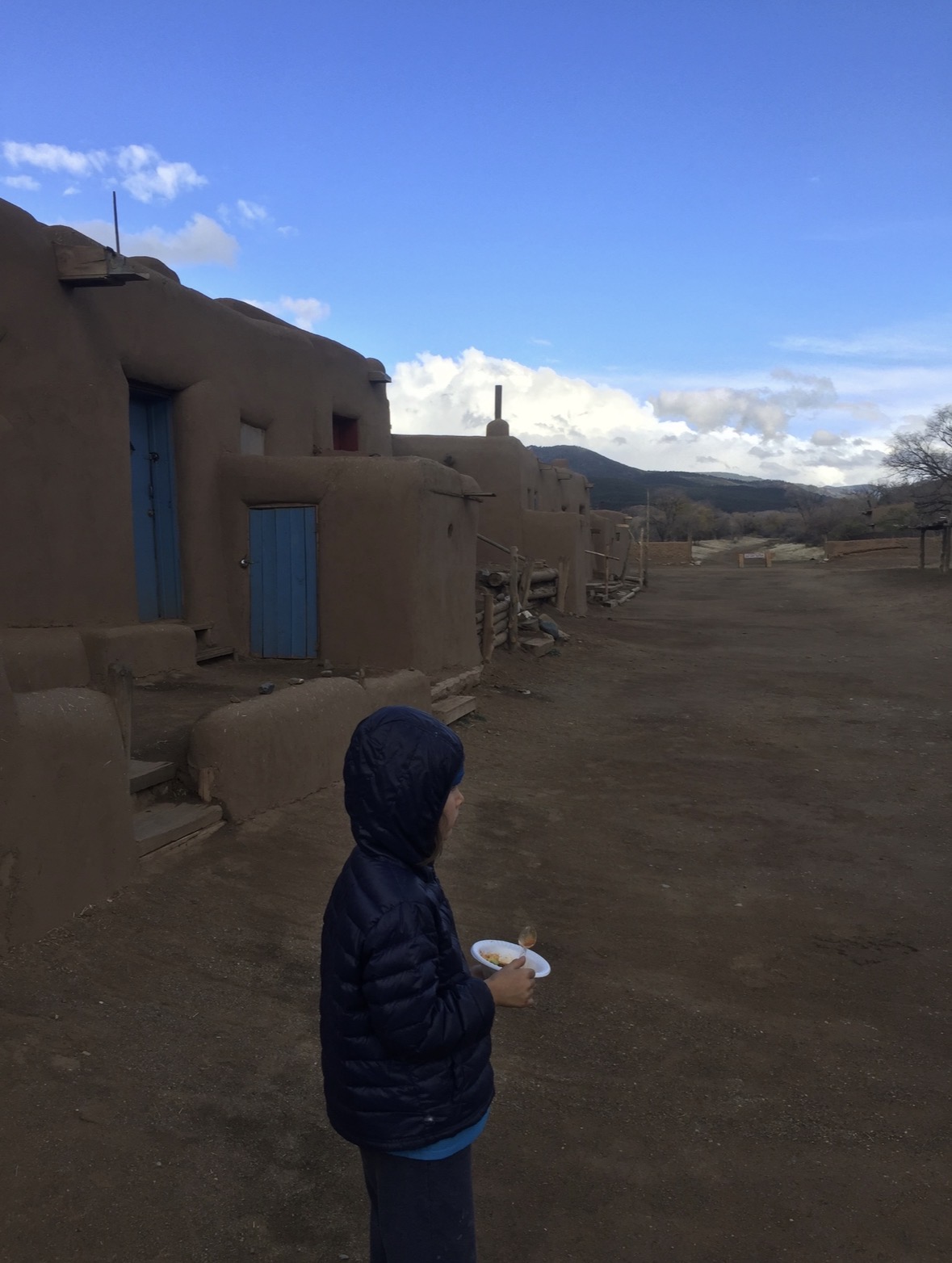
Folded into play
As if he had always been there
The adults talked, looked over wares, traded, sold, and ate. Robbie joined a group of children playing tag. They ran through the open spaces and among the Pueblo buildings, folding him into their game as if he had lived there his entire life.
When it was time to eat, the children jockeyed for fry bread and settled onto the front stoops. The red dust raised by their running slowly came back to earth.
People meeting people
A gathering across nations
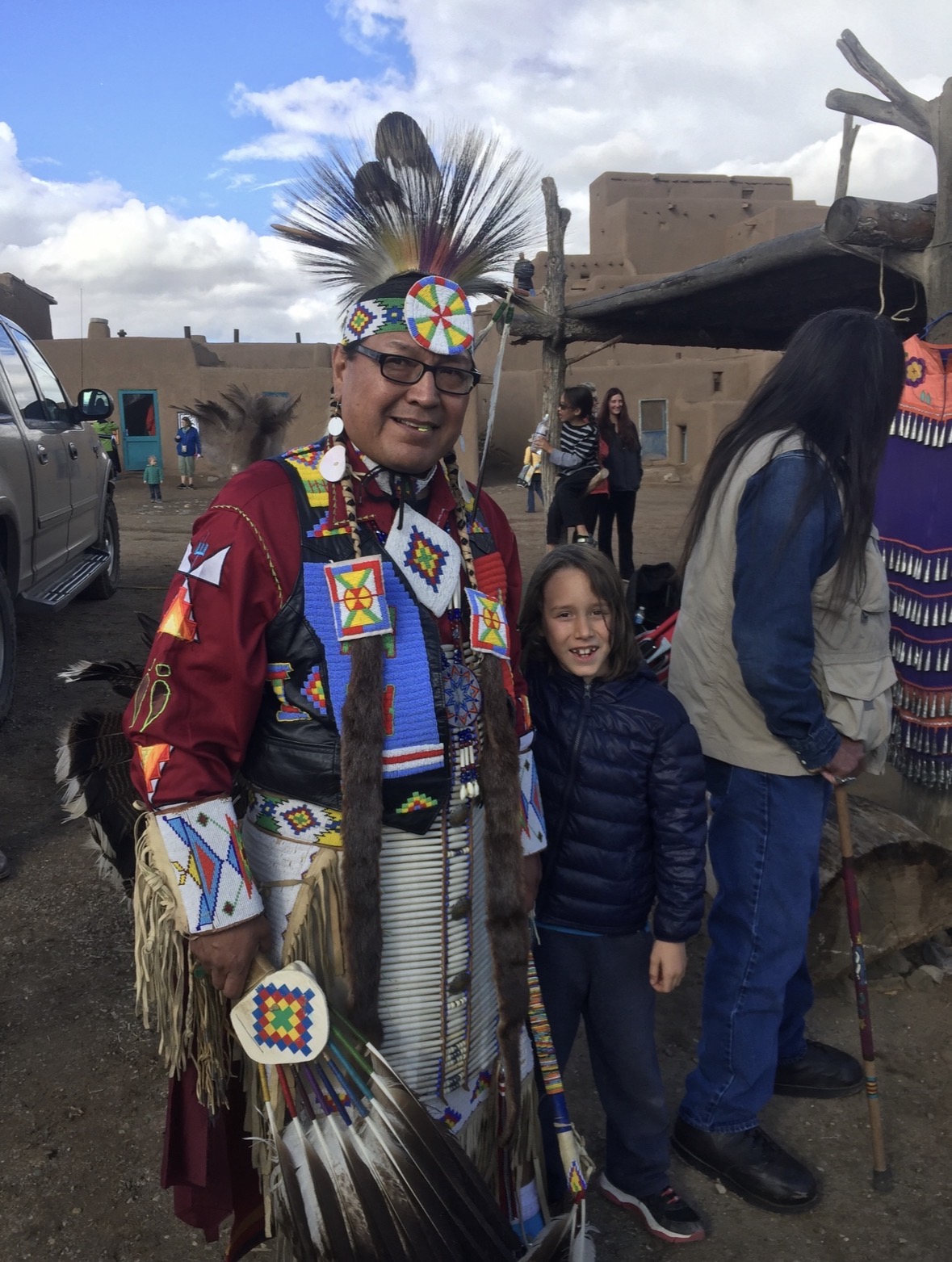
Taos families welcomed Lakota visitors who had traveled south. The gathering made room for conversation, food, exchange, dance, and the work of strengthening relationships between tribal communities.
The participant pictured with Robbie wears Northern Plains traditional regalia. A porcupine hair roach, bone breastplate, beadwork, feather fan, and bustle are characteristic of the Northern Men’s Traditional style. Regalia can express family, community, and individual identity, but clothing alone does not establish a person’s nation.
Mní Wičhóni
Water is life.
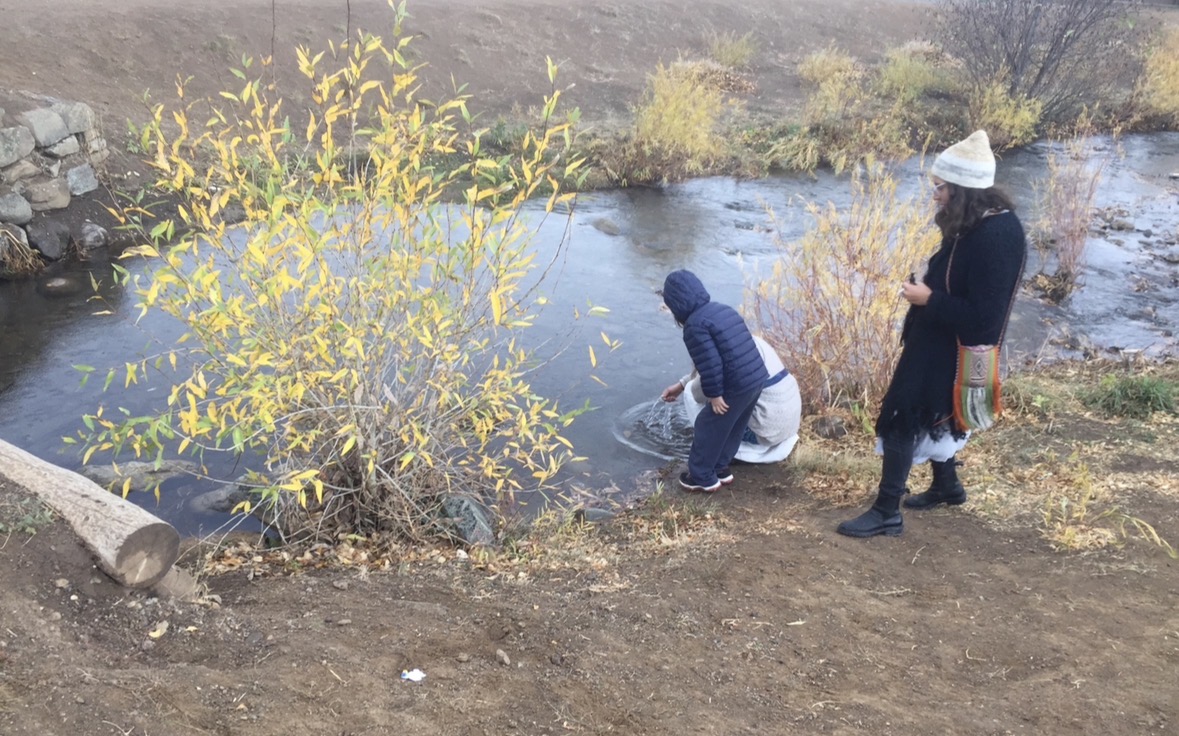
After the meal, people gathered in a circle. Small groups danced. At other moments, everyone chanted together. Elders spoke about water, responsibility, and the Lakota phrase Mní Wičhóni: Water is Life.
The river passing through the Pueblo is not scenery. It is the community’s sole source of drinking water and part of the living relationship between land, people, and continuity.
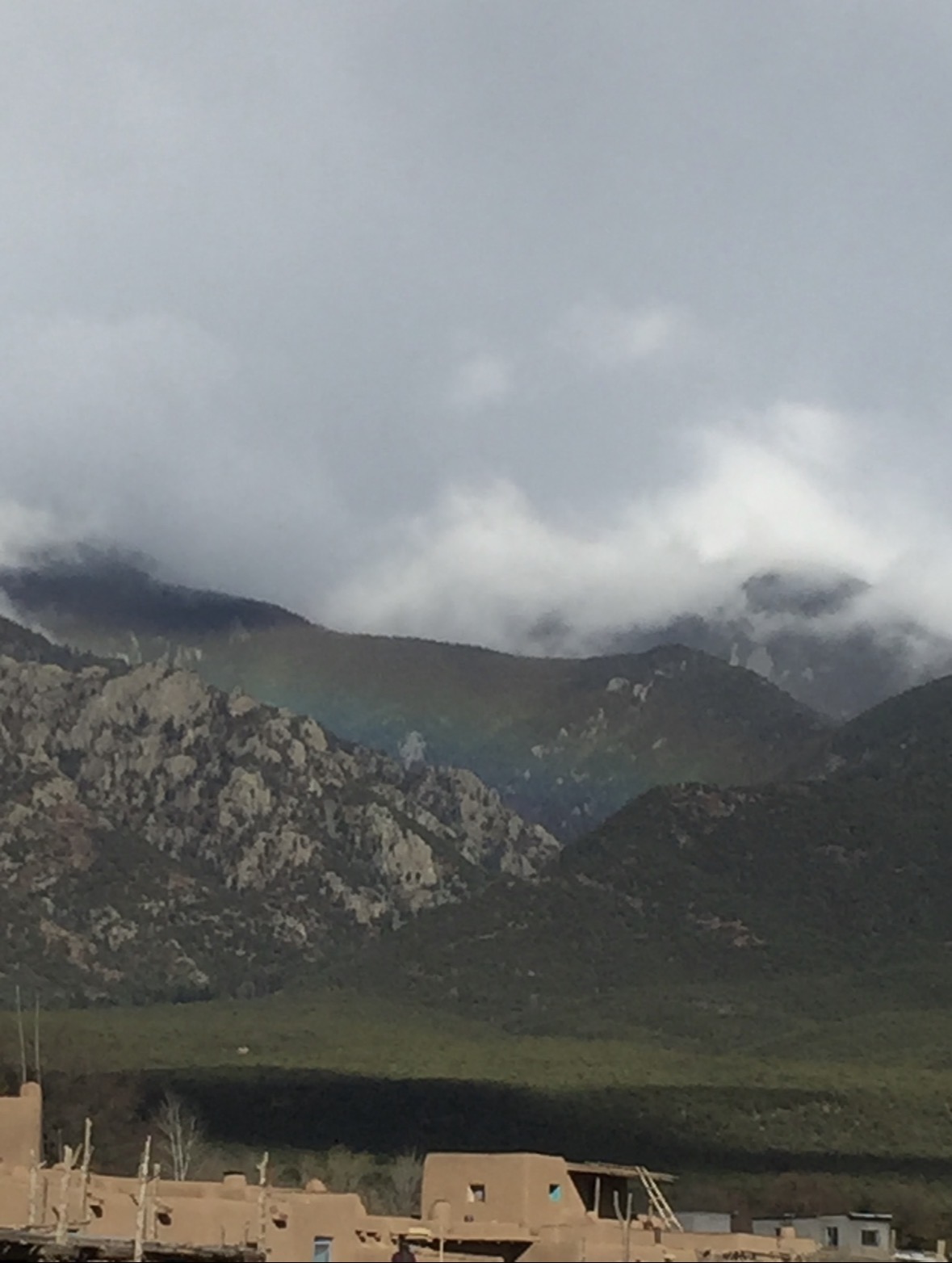
A living landmark
History in the present tense
The Pueblo’s designation as a landmark recognizes architecture and cultural continuity, but a designation is not the source of its meaning. Taos Pueblo is governed by its own sovereign tribal government and sustained by the people who live there.
To visit is to enter someone else’s home. The community sets the terms of access, photography, and participation. Those terms protect privacy and religious life while allowing visitors to learn through welcome.
Current visitor guidance ↗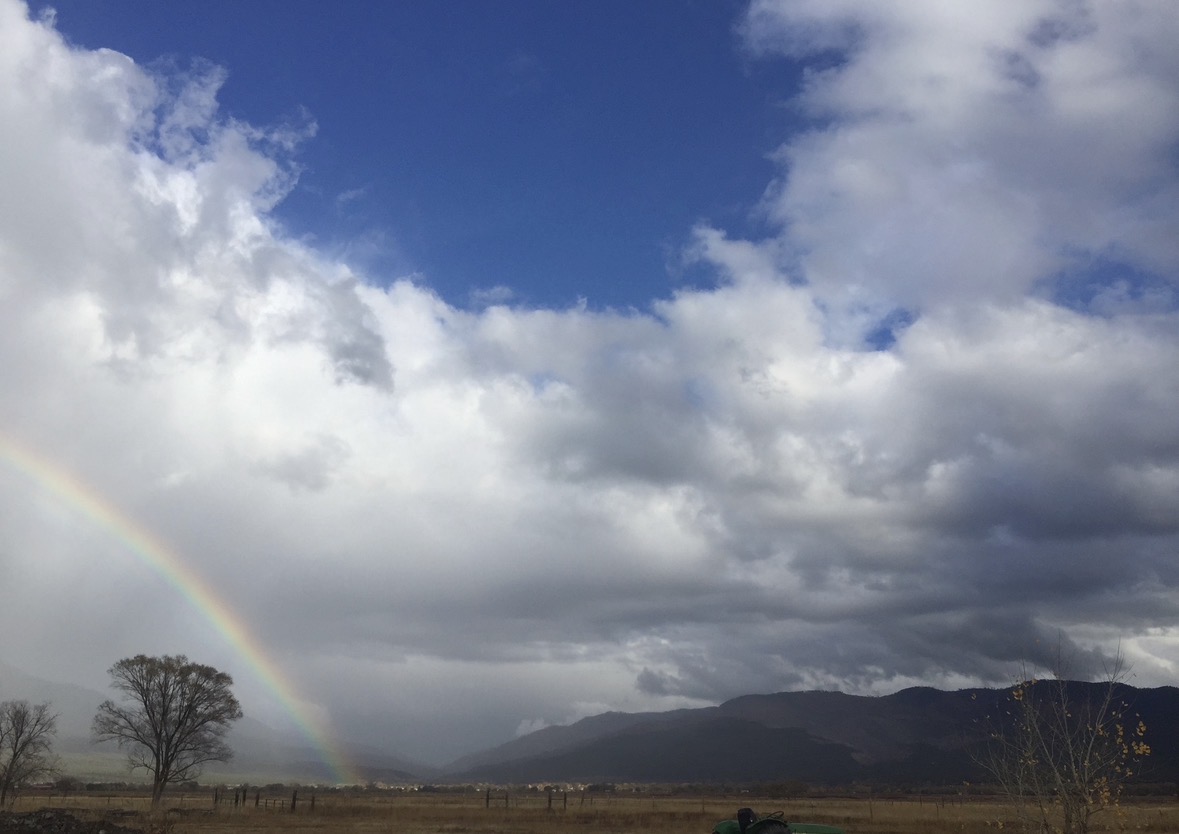
The circle closes
The clouds parted.
After the last chant and song, the circle held hands in silence. Then the clouds opened and a rainbow crossed the sky. It did not need to be interpreted. Everyone simply stood beneath it together.