Alaska · National Park
Kobuk
Valley
Where Arctic forest gives way to a moving world of sand.
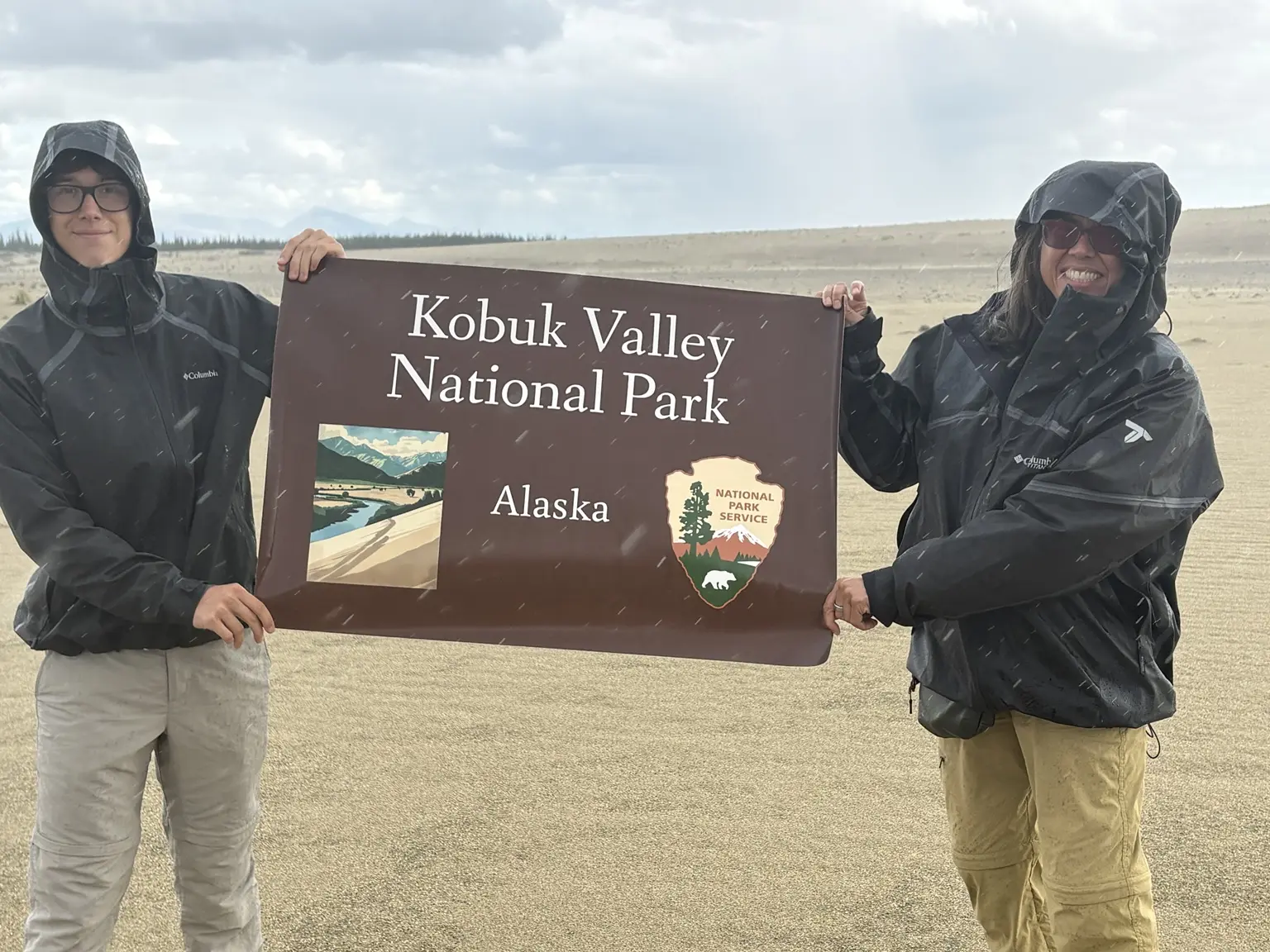
Field note
Kobuk Valley is not an empty wilderness. It is a living corridor, remembered in footprints, hoofprints, river crossings, camps, tools, and knowledge carried forward.
The valley is part of the traditional homeland of the Iñupiaq people. Human presence here reaches back roughly ten thousand years. The Kobuk River has long carried people, fish, caribou, food, stories, and ways of knowing from one generation to the next.
Movement
The migration the park protects
Each spring and fall, the Western Arctic Caribou Herd travels through Kobuk Valley between northern calving grounds and winter range in the boreal forest. The animals cross the river and leave the dunes patterned with hoofprints. It is one of the last great migrations of large mammals that remains unobstructed by roads.
We did not see the caribou here. Yet their movement is part of what gives the valley its shape and meaning. Their absence from our photographs is not an absence from the land.
NPS: caribou and the living corridor ↗Memory
Paatitaaq is living history
At Paatitaaq, also known as Onion Portage, people have gathered for millennia where migrating caribou cross the Kobuk River. Layers of camps, tools, structures, and animal bones preserve a record of repeated human presence reaching back roughly ten thousand years.
This story did not end when the park was created. Iñupiat families from communities around the valley continue to fish, hunt, travel, gather, share food, and teach younger generations. Paatitaaq remains a meeting place. Memory here is not something stored only beneath the ground. It is practiced.
NPS: Paatitaaq and Iñupiat heritage ↗Scale and presence
What was there without being seen
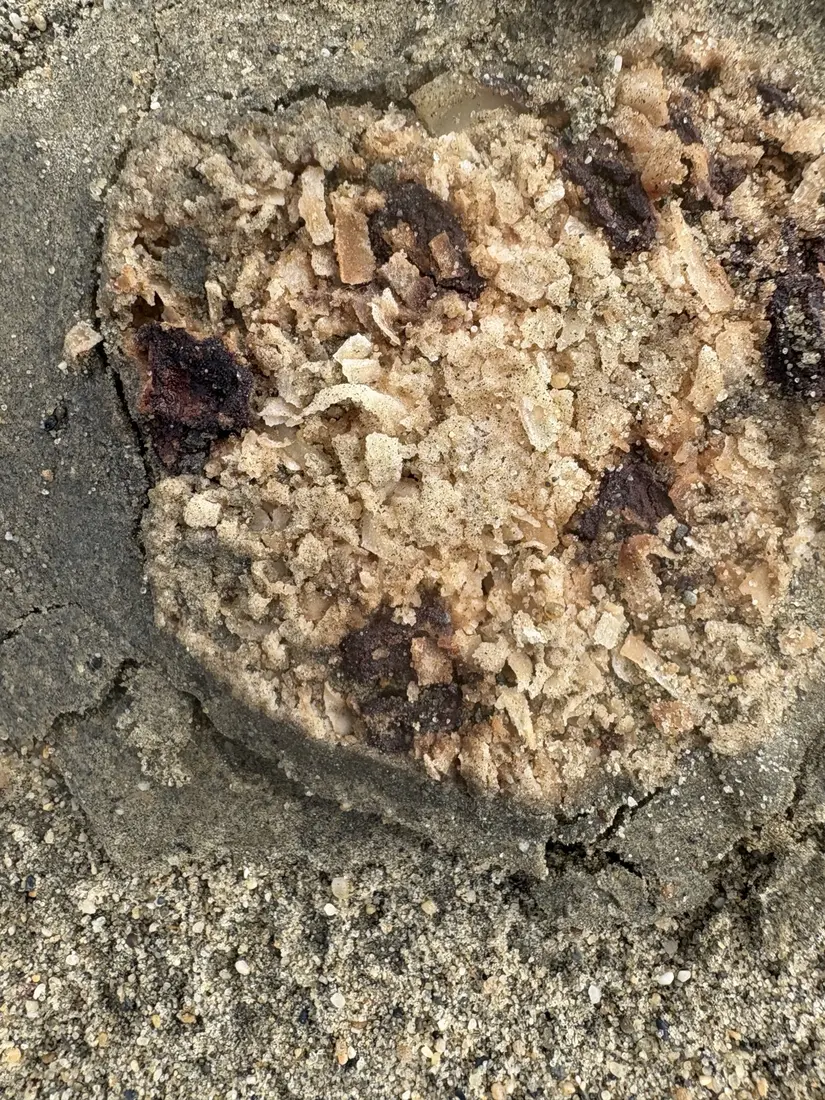
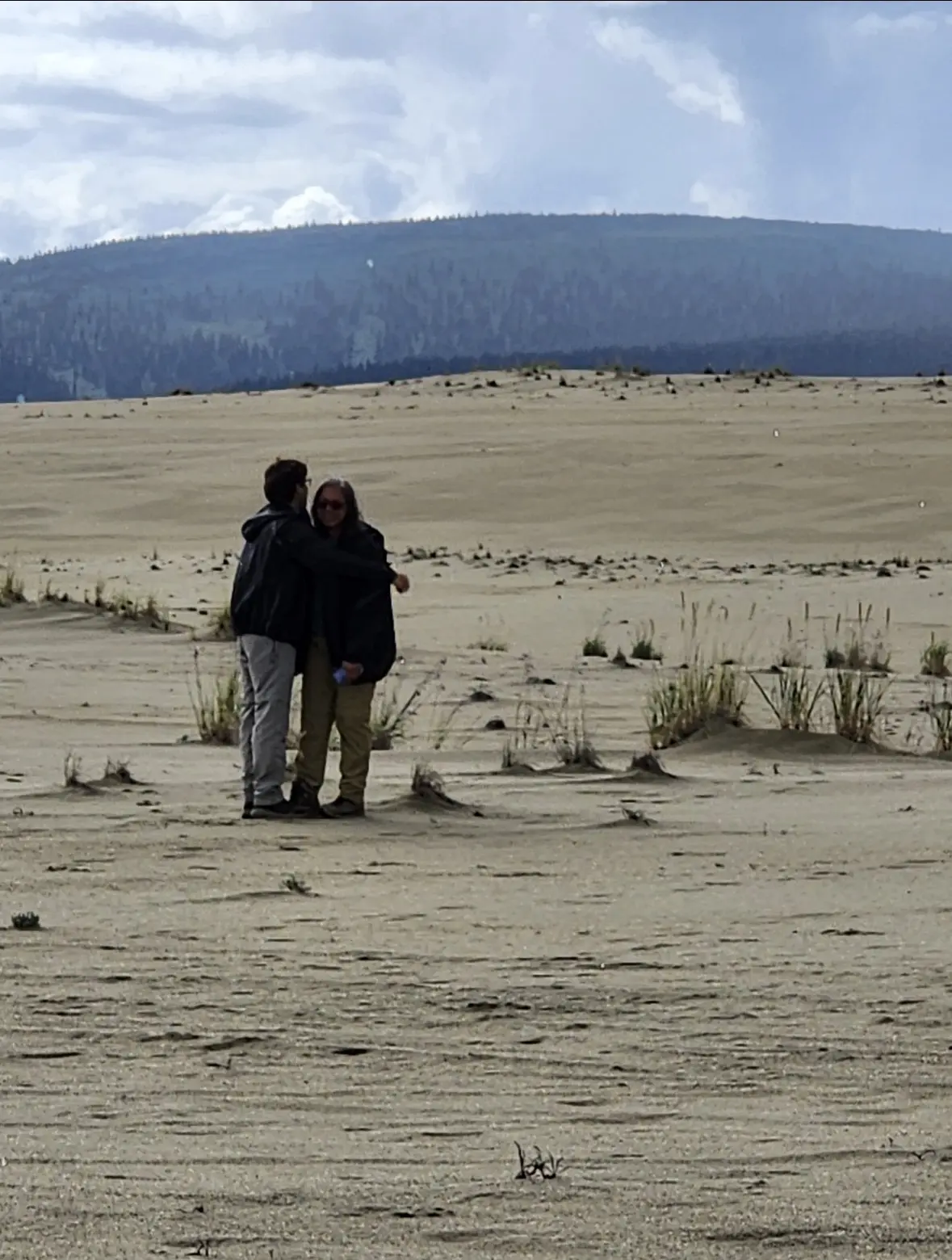
Robbie became a small figure against the sand and weather. Nearby, stepped on bear scat marked another life moving through the same place. We did not see the bear. The evidence was enough to change the way we paid attention.
Park 63
All sixty three
Kobuk Valley was the completion of a journey through all 63 national parks. There was no crowd or ceremony, only rain moving over the dunes.
Getting to all 63 national parks, and this one in particular, was no small achievement. As we stood there, we acknowledged the miles behind us, the attention he had given each place, and the meaning of finally arriving at this park.
Robbie did not move through these places as a collector of names. He noticed, responded, and formed relationships with the people and the land. The deeper story here is the person he has become while journeying through the parks.
Our arrival
The flight in
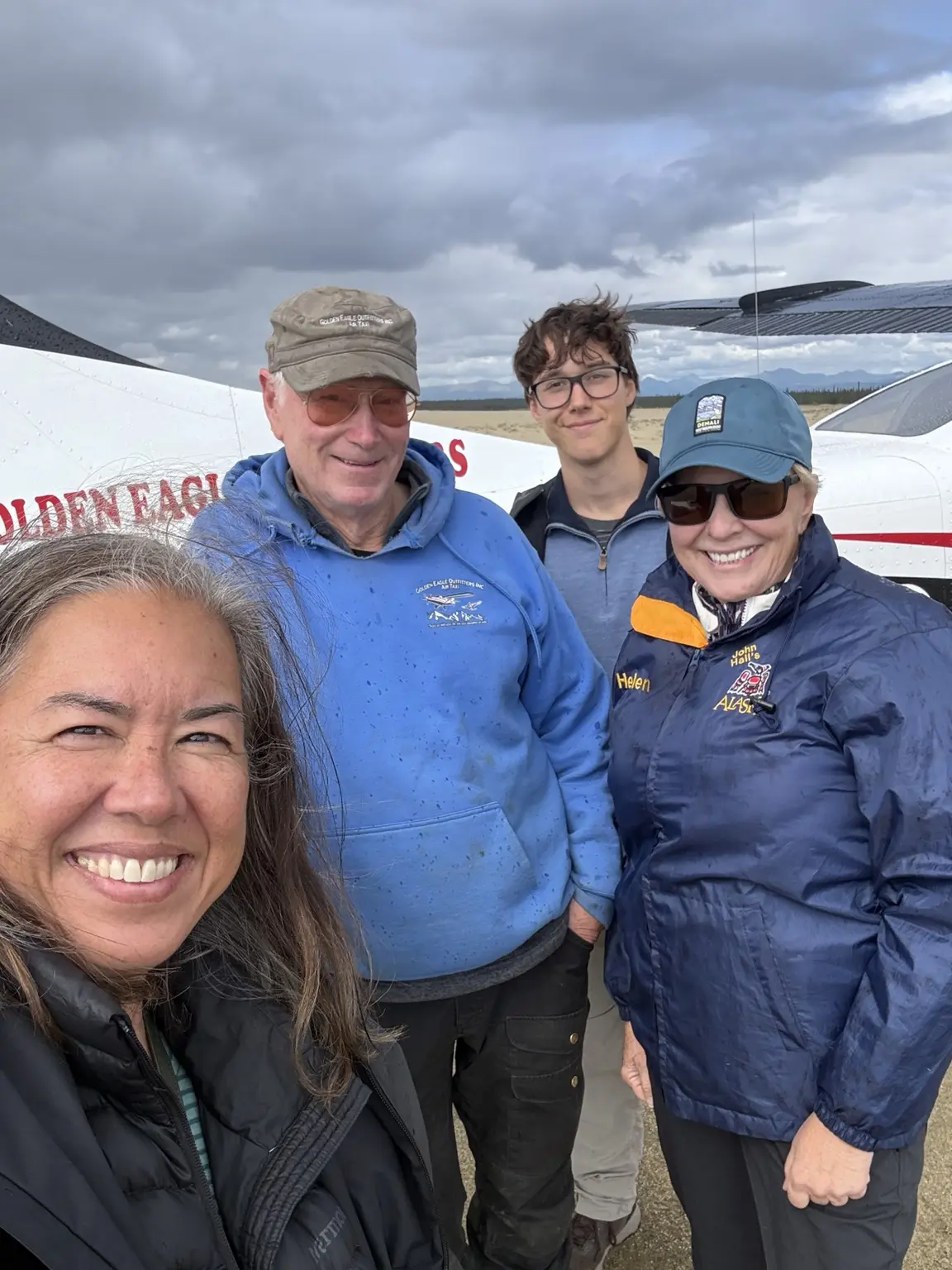
Jim Cummings flew our small party from Kotzebue. A pilot since the 1970s, Jim later founded Golden Eagle Outfitters, a family operated air taxi whose pilots now include his sons. We are grateful for the skill and local knowledge that brought us safely into the park. The flight is part of our story, but it is only one recent journey through a place defined by movement across thousands of years.
Golden Eagle Outfitters ↗NPS: planning the journey ↗
Robbie’s field notes
Another Sand Particle
Kobuk Valley felt more surreal than the other places where I have walked on sand. There were no roads nearby for what felt like forever. We flew over 100 miles of lakes and tundra before landing directly on the sand, I was surprised seeing so many lakes!
The dunes did not feel quiet in the same way as Bering Land Bridge. The wind was more active at Kobuk, and everything was vast and huge. Sand moved around us, and a storm began while we were there. From the top of the dunes, the landscape stretched in every direction.
If someone asked me why it was worth going there, I would say: to experience what it is like to be another sand particle. In a place that large and remote, you can forget about yourself for a while.
Kobuk Valley was the final national park in our journey to all 63. That made being there emotional, but I was also excited simply because of where we were. I would like to return someday, walk down to the water, and camp there.
Planning the journey
Traveling into the Western Arctic
Practical notes on bush flights, weather, lodging, food, and moving respectfully through these roadless parklands are being prepared.
Western Arctic field guide · Coming soon